Grounded by Nature
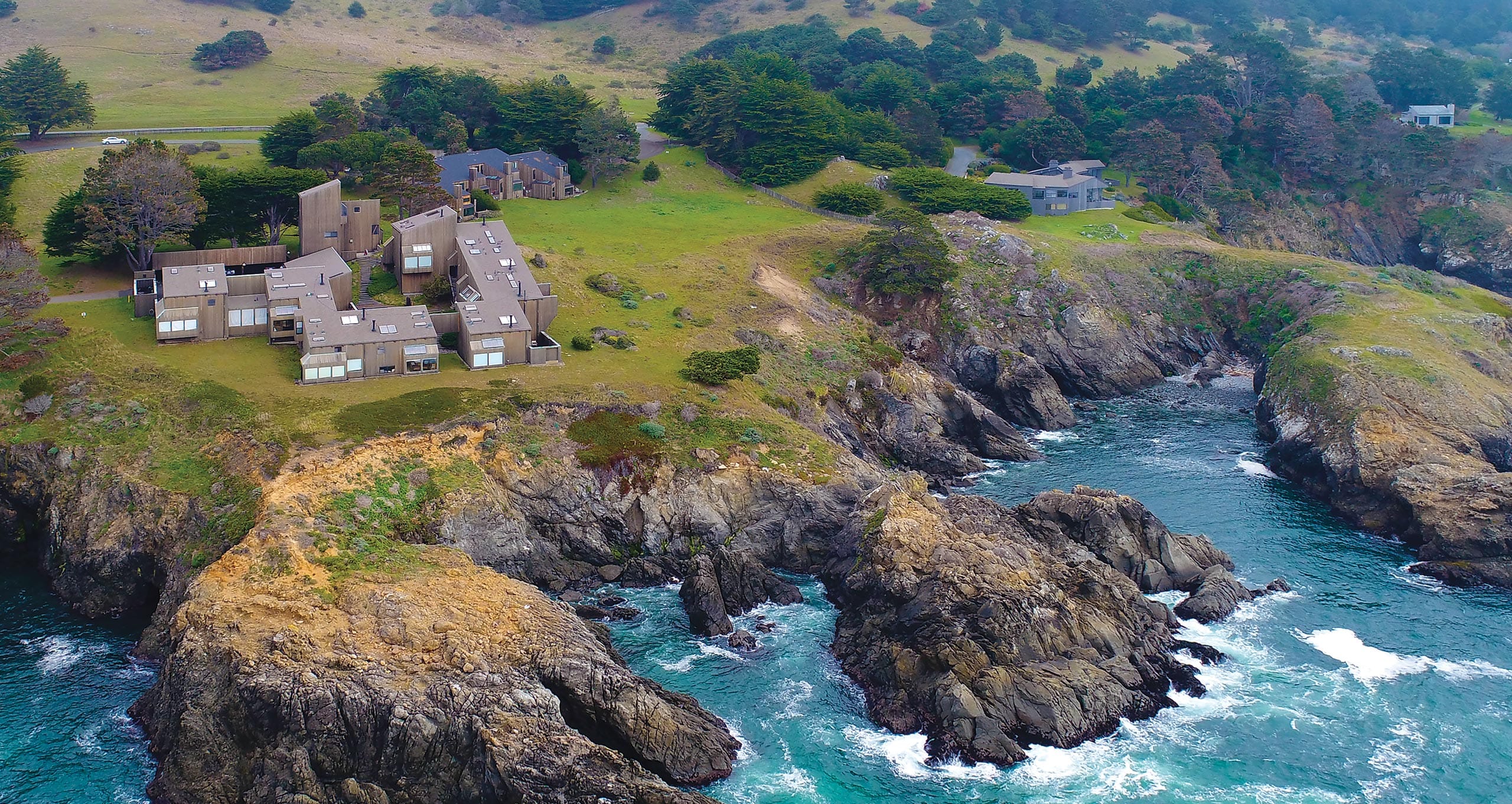
Welcome to Sea Ranch ...
When I was a kid growing up in San Francisco in the 1970s, my family spent every Thanksgiving weekend at Sea Ranch, the pastoral coastal community 100 miles north of the Bay Area.
We visited my aunt and uncle, who have a house there, as we have done every year since. Even to a child, there was something different about Sea Ranch: The houses were sparsely situated, grass and dirt were abundant, and the ocean was a constant presence.
I grew up as Sea Ranch expanded from a couple hundred homes to a couple thousand buildings. I matured as the place did and marveled how in a world that does not always change for the better, Sea Ranch maintained its integrity. What I did not know, way back then, was that I was spending time amid a grand design experiment. Sea Ranch was a bold attempt to reinvent how rural homes are placed in nature. The style that emerged from this windswept northern California crucible was a timeless modern design that fed directly into the late 20th-century zeitgeist and influenced the way we live — or wished we could live — now.

To appreciate fully what Sea Ranch is, you have to step back in time to 1960, and imagine what it could have been. At that time, the area was just 10 miles of rocky coastline and lonely ranchland abutting the Pacific Ocean. Known as Del Mar Ranch, the 4,000 acres of grassland had been logged, farmed with sheep, and planted with periodic rows of cypress trees to control a near constant wind. Sea Ranch would soon be developed as a planned community of mostly second homes, but the developers decided to try something new. They hired a smart team of thinkers, designers, and builders to develop the land cautiously, thoughtfully, and with foresight.
The project’s founding landscape architect, Lawrence Halprin, put together a handwritten and watercolor-painted one-page document remarkable in its simplicity:
• No lawns
• Native trees only
• No paint,
• Houses in clusters, limit heights
• Avoid suburbanization
Included in Halprin’s master landscape plan was the novel idea to preserve half of the land for common use — for wandering and walking and gazing out to sea. Today, no matter where you are in Sea Ranch, your eyes quickly find the vast Pacific Ocean and the far-off horizon, and your ears are filled with the sound of crashing waves.
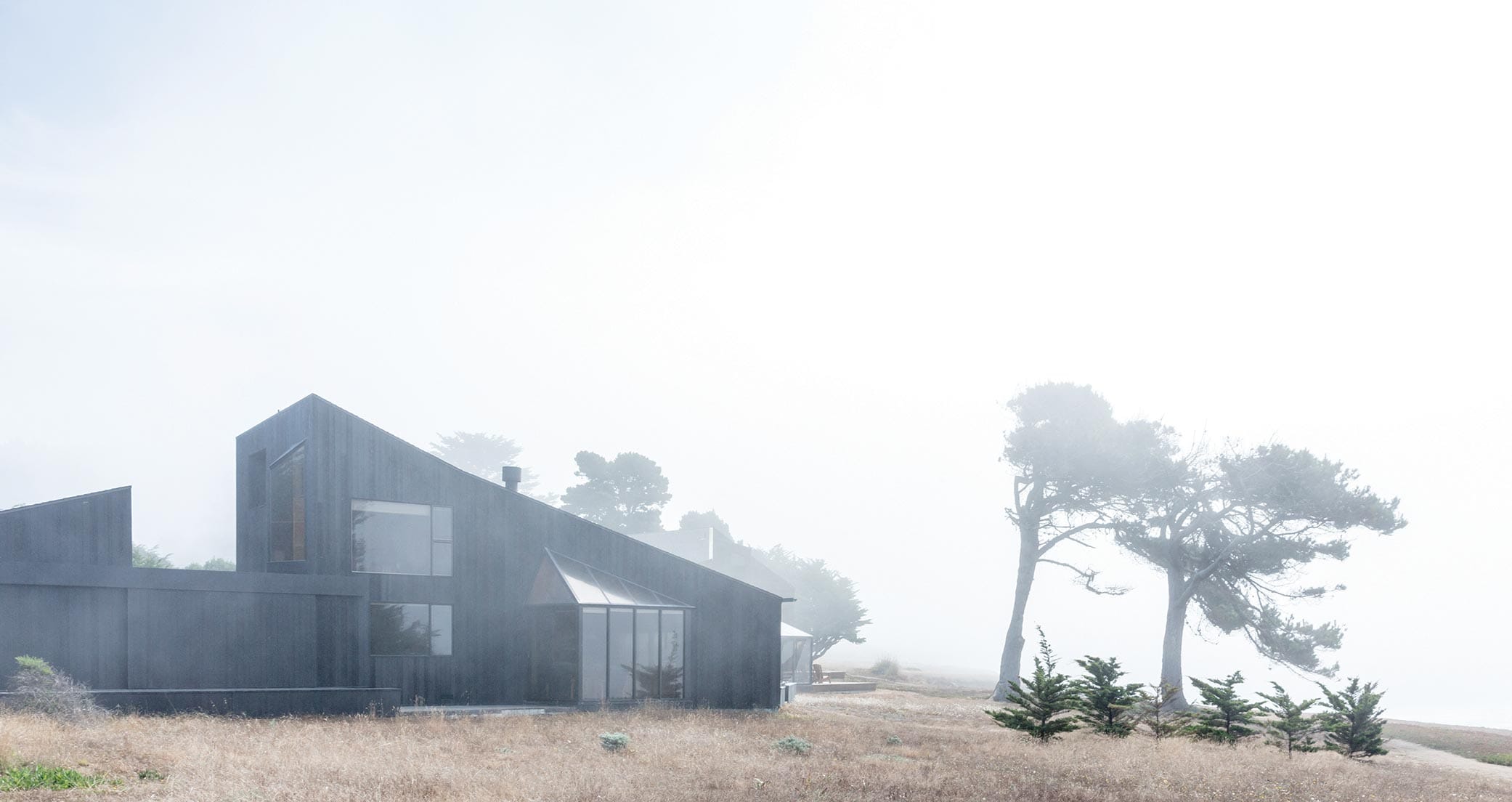
Among the first buildings built at Sea Ranch was a 10-unit complex called Condominium One. Sea Ranch’s developers hired four architects, who were relatively young at the time, with the idea that they would design a building to set the tone for things to come. The architects — Charles Moore, Richard Whitaker, Donlyn Lyndon, and William Turnbull — took cues from the local barns and sheep sheds that, through integrity and strong character, belonged to the landscape. Condominium One had a blank facade and large structural timber sawn at local mills, as well as a single continuous angled roofline designed to deflect northwesterly winds. The building launched a Sea Ranch idiom, a north coast regionalist architecture of new wave, vertical redwood-sided cabins. Condominium One was a prototype for Sea Ranch, set there on the cliffs to be learned from and mirrored, added to, and copied.
“As I gazed through the window, it came to me in an instant: If you built a dwelling that was limited in scope but had all you need, you, the inhabitant, would then change your life to match the space.”
Even now, more than 50 years later, after almost 2,000 buildings have been built, nature still dominates. For the most part, the structures stand comfortably with the natural world they inhabit and echo the elements of the place. Acting like wood and glass sculptures, homes add to the environment and merge into parts of an organic whole.
Due to its success, Sea Ranch has been parsed, examined, and fawned over by theorists. The San Francisco Museum of Modern Art even featured a show on Sea Ranch recently. To be honest, for the first 40 years I visited Sea Ranch, I gave little thought to the bold vision behind the place, I just did my thing. Sometimes I even balked at the way nature took a back seat role as just scenery and how activity yielded to pensiveness. In fact, I rarely stopped to think about the Sea Ranch vision, I just lived it. That changed, though, when I recently walked up to a Sea Ranch cabin built in 1972 and gazed longingly through the window. The cabin was for sale and it was clear the buyer would purchase a piece of history along with the cabin.

Built by architect Obie Bowman, this cabin and 14 others just like it are diminutive in size — 600 square feet — and sited close to one another in a dark woods setting. Like a lot of buildings at Sea Ranch, the walk-in cabins use sophisticated design but unpretentious materials — fir, redwood, and plywood mainly — often exposed to show their function (as studs and rafters).
To me, this walk-in cabin is the purest evocation of the Sea Ranch vision because it incorporates a vision for the inside of the cabin as well as the outside. With its pocket kitchen, built-in shelves, sleeping loft, woodstove, and open living area, this space has everything necessary to live comfortably inside. The cabin holds back nothing, sharing its inside with the outside world, and leaves little between the inhabitant and nature.
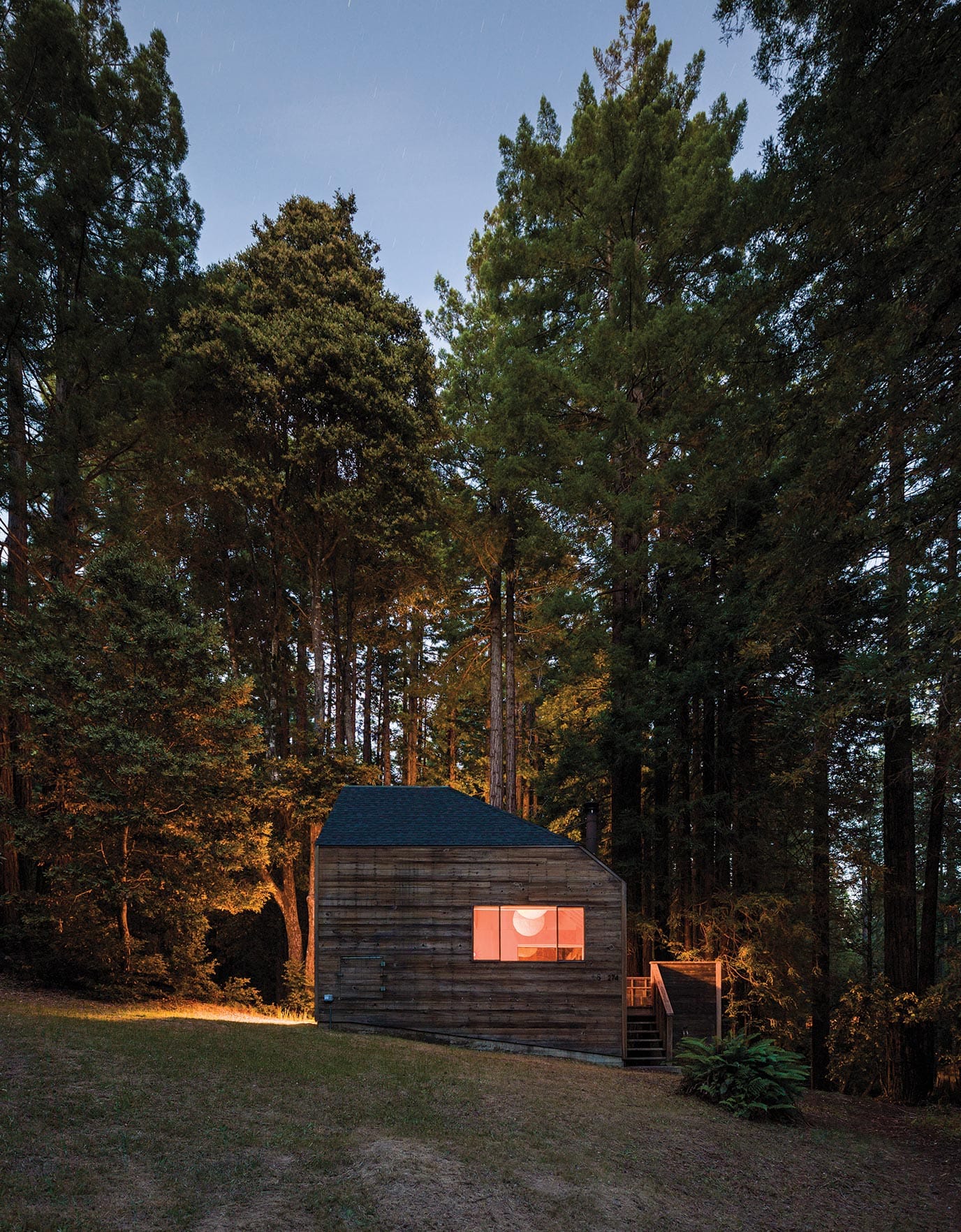
By exercising control, good design would lead to better living. Bowman knew that as is evidenced in his simple design: nothing extraneous. As writer Antoine de Saint-Exupery observed in 1939, “Perfection is finally attained not when there is no longer anything to add, but when there is no longer anything to take away, when a body has been stripped down to its nakedness.” This Bowman cabin was naked, and I was transfixed.
By
Alex Frankel